This field success story from Andhra Pradesh highlights how palm oil farmers managed Ganoderma disease using Gramabazaar organic solutions. Through soil strengthening, proper drenching, and timely applications, infected trees recovered, disease spread reduced, and crop vitality improved, proving that natural methods deliver sustainable, cost-effective disease control and long-term plantation productivity.
Understanding Ganoderma Disease in Palm Oil Plantations
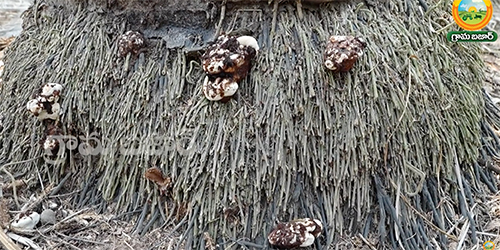
Ganoderma is a serious soil-borne fungal disease affecting palm oil roots, gradually weakening trees and reducing yield. Early symptoms include yellowing leaves, reduced growth, and stem decay. If untreated, trees collapse completely. The disease spreads through soil and water, making early diagnosis and effective soil treatment essential for long-term plantation health.
Challenges with Chemical-Based Disease Control
Chemical fungicides provide limited control over Ganoderma and often damage soil biology. Farmers experienced repeated disease recurrence despite high chemical investments. Continuous chemical usage hardened soil, reduced microbial activity, and weakened root systems. This pushed farmers to search for natural alternatives that could strengthen soil health while delivering lasting disease resistance.
Adopting Gramabazaar Organic Treatment Approach
Farmers applied Gramabazaar organic solutions through soil drenching around the palm base. This method ensured deep root penetration and effective pathogen control. Regular application strengthened root development, improved nutrient absorption, and activated beneficial microbes. Within weeks, disease progression slowed, and visible plant recovery started, building strong farmer confidence.
Visible Recovery and Yield Improvement
Affected palm oil trees showed fresh leaf growth, stronger trunks, and healthier root systems. Flowering and fruit bunch formation gradually improved. Palms once expected to die began recovering steadily, delivering better yield stability, improved bunch quality, and higher oil productivity, significantly improving farm income and long-term plantation sustainability.
Farmer Confidence and Sustainable Farming Impact
This success encouraged neighboring farmers to adopt organic disease management. Reduced chemical dependence, healthier soil, lower input costs, and consistent yields improved overall farm sustainability. The approach proved that strengthening soil ecology naturally prevents disease recurrence and builds resilient palm oil plantations for long-term agricultural success.
Leave a Reply
You must be logged in to post a comment.