
Controlling Tuber Rot in Banana Plants
The farmer initially noticed severe tuber rot, causing leaf fall and foul smell near the base of banana plants. After applying Nemzap, the rotting stopped and new leaves began standing upright. Within weeks, plant health visibly improved, indicating recovery from root-level infection.
Farmer Experience from Konaseema District
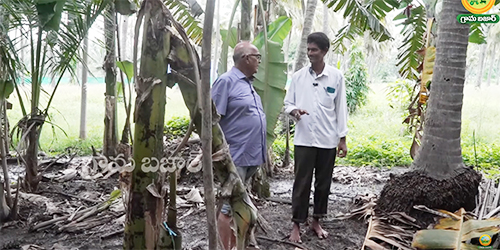
The Gramabazaar team visited Subbaraju’s banana plantation in Tatipudi village, Konaseema district. He cultivated 700 banana plants and faced serious root and tuber disease due to heavy rainfall and fluctuating weather. Seeking a solution, he turned to Nemzap after learning about it on YouTube.
Correct Application and Visible Results
Nemzap was applied by mixing one litre per tank and spraying directly at the plant base. Changes were noticed after about two months—leaf rot disappeared, bad odor stopped, and plants regained strength. Out of 50–60 affected plants, only one failed while the rest recovered well.
Reduced Input Costs and Better Yield
Unlike conventional farms using 15–25 fertilizer bags per acre, this farmer reduced chemical usage significantly. His total input cost for 700 plants was around ₹22,000, including Nemzap and GrowthFit. Despite wind damage to some plants, the yield remained commercially viable.
Moving Towards Sustainable Farming Practices
The farmer follows eco-friendly methods beyond pest control. He avoids burning crop residue, incorporates it back into the soil, and believes soil health is key to long-term productivity. His experience proves that reducing chemicals, managing costs, and respecting nature can still deliver profitable farming.
Leave a Reply
You must be logged in to post a comment.