
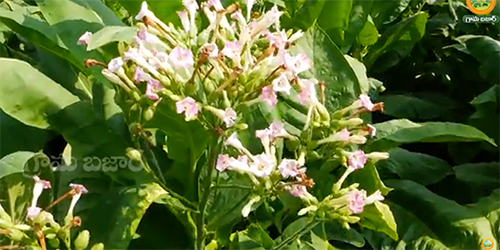
Tobacco farmers often struggle with leaf blackening, pest pressure, and rising input costs. This field interaction from Prakasam district highlights how natural soil and foliar applications helped improve plant strength, reduce pest load, and enhance market quality in a six-acre tobacco crop under real farming conditions.
Field Background and Crop Condition
The visit took place at a six-acre tobacco field in Tanneeru Varipalem, Parchur mandal. The crop was nearing harvest, around 20–25 days away. Earlier applications in East and West Godavari showed promising results, encouraging trials in Prakasam district under similar soil and water conditions.
Addressing Blackening and Early Plant Stress
Farmers reported leaf blackening during early growth stages, which usually worsens after irrigation. After soil application, the blackening did not spread and remained stable on the outer layer. Even after watering, plants held firmness, indicating improved root strength and reduced physiological stress in tobacco plants.
Pest Pressure and Natural Control Observations
Rubber caterpillar and laddy pest presence was observed mainly on lower leaves. However, infestation remained limited and manageable. Regular field monitoring showed that pest pressure did not escalate aggressively, reducing the need for frequent chemical sprays and helping maintain healthier foliage throughout the crop cycle.
Spray Scheduling and Growth Uniformity
Timed foliar sprays supported uniform leaf expansion and better canopy closure. Upper and lower leaves gradually synchronized in growth, improving plant balance. Farmers noted visible greening and thickness in leaves, an important factor for tobacco grading, curing quality, and final market acceptance.
Cost Reduction and Market Feedback
By reducing fertilizer and pesticide usage, farmers reported noticeable cost savings. Market feedback highlighted better leaf body and appearance, leading to improved pricing. Experienced farmers with over four decades in tobacco cultivation observed that balanced nutrition played a key role in sustaining crop performance and profitability.
Leave a Reply
You must be logged in to post a comment.